
Product Details
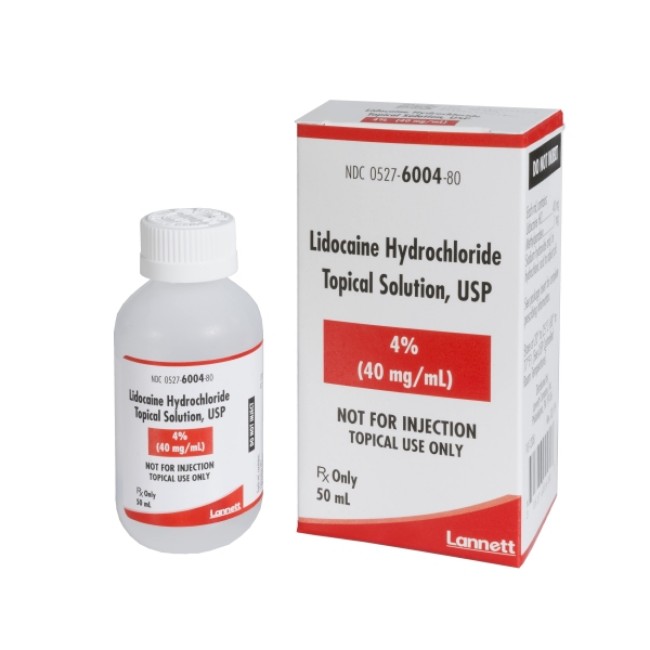
LIDOCAINE HCL 4% TOPICAL SOL 50 ML
Manufacturer: Lannett
MFG#: 00527-6004-80
NDC: 00527-6004-80
PID: 322042
UN
$ *.**
In StockProduct Properties:
| Description | - |
|---|---|
| Description | - |
| DESI Drug Ind | - |
| DESI Drug Ind | - |
| DESI2 Drug Ind | AT |
| DESI2 Drug Ind | AT |
| Drug Category | - |
| Drug Category | - |
| Drug Type Code | N |
| Drug Type Code | N |
| FDA Approval Date | 09/06/2007 |
| FDA Approval Date | 09/06/2007 |
| FDA Therap Equiv | ML |
| FDA Therap Equiv | ML |
| HCPCS | - |
| HCPCS | - |
| Market Entry Date | - |
| Market Entry Date | - |
| Medical Coverage | - |
| Medical Coverage | - |
| Termination Date | 1 |
| Termination Date | 1 |
| Unit | 50 |
| Unit | 50 |
| Units Per Pkg | 02/27/2007 |
| Units Per Pkg | 02/27/2007 |
| Active Ingredients | 1351 lidocaine HCl 6108050 |
| Active Ingredients | 1351 lidocaine HCl 6108050 |
| AHFS Class | 52160000 LOCAL ANESTHETICS (EENT) |
| AHFS Class | 52160000 LOCAL ANESTHETICS (EENT) |
| DEA Class | NC |
| DEA Class | NC |
| Dose Form | SOLUTION, NON-ORAL |
| Dose Form | SOLUTION, NON-ORAL |
| Fine Line Class | 850085008510 All Rx Products |
| Fine Line Class | 850085008510 All Rx Products |
| Gen Code and Des | 3412 lidocaine HCl MUCOUS MEM SOLUTION 40 MG/ML |
| Gen Code and Des | 3412 lidocaine HCl MUCOUS MEM SOLUTION 40 MG/ML |
| Inactive Ingredients | 2600 saccharin 81072; 3203 paraben 99967 |
| Inactive Ingredients | 2600 saccharin 81072; 3203 paraben 99967 |
| OMP Family | - |
| OMP Family | - |
| Product Category | RX Pharmaceuticals |
| Product Category | RX Pharmaceuticals |
| Strength | 4% |
| Strength | 4% |
| Common Brand Name | COMMON BRAND NAME(S): Xylocaine |
| Common Brand Name | COMMON BRAND NAME(S): Xylocaine |
| Drug Interaction | DRUG INTERACTIONS: Drug interactions may change how your medications work or increase your risk for serious side effects. This document does not contain all possible drug interactions. Keep a list of all the products you use (including prescription/nonprescription drugs and herbal products) and share it with your doctor and pharmacist. Do not start, stop, or change the dosage of any medicines without your doctor's approval. Tell your doctor or pharmacist if you are using other lidocaine products at the same time as this medication because your risk of serious side effects may increase. |
| Drug Interaction | DRUG INTERACTIONS: Drug interactions may change how your medications work or increase your risk for serious side effects. This document does not contain all possible drug interactions. Keep a list of all the products you use (including prescription/nonprescription drugs and herbal products) and share it with your doctor and pharmacist. Do not start, stop, or change the dosage of any medicines without your doctor's approval. Tell your doctor or pharmacist if you are using other lidocaine products at the same time as this medication because your risk of serious side effects may increase. |
| Allocation Period | - |
| Allocation Period | - |
| Case Quantity | 24 |
| Case Quantity | 24 |
| Drug Form Pack Size | 50 |
| Drug Form Pack Size | 50 |
| Form | SOLUTION |
| Form | SOLUTION |
| Hazard Code | - |
| Hazard Code | - |
| Listed Chemical | - |
| Listed Chemical | - |
| NIOSH Code | - |
| NIOSH Code | - |
| Orange Book | AT Topical products therapeutically equivalent in same dosage form. |
| Orange Book | AT Topical products therapeutically equivalent in same dosage form. |
| Retail Pack Quantity | 1 |
| Retail Pack Quantity | 1 |
| Returnable Status | Returnable |
| Returnable Status | Returnable |
| Special Storage Cond | 00 None |
| Special Storage Cond | 00 None |
| Temp Zone | 10 Room Temperature |
| Temp Zone | 10 Room Temperature |
| Unit | EA |
| Unit | EA |
| Unit Size | 50 |
| Unit Size | 50 |
| How to Use | HOW TO USE: Read the Patient Information Leaflet if available from your pharmacist before you start using lidocaine and each time you get a refill. If you have any questions, ask your doctor or pharmacist. This medication is usually applied by a health care professional as directed by your doctor right before your procedure. This medication may be used as a spray by putting the solution into a special spray bottle (atomizer) or nebulizer. It can also be applied directly to the affected area with a sterile applicator or swab. Throw away the applicator or swab after use. If you are using this medication at home, learn all preparation and usage instructions from your health care professional and the product package. Follow your doctor's instructions carefully. Do not swallow or gargle the medication unless directed to do so by your doctor. The dosage is based on your medical condition and response to treatment. In children, the dosage is also based on age and weight. Do not increase your dose or use this drug more often or for longer than prescribed. Doing so can increase your risk of serious side effects. When this medication is used in the mouth or throat, numbness may make swallowing difficult and increase your risk of swallowing the wrong way or choking. Do not chew gum or eat for 1 hour after using this product and while your mouth or throat is numb. It is especially important for children to not eat or chew gum for at least 1 hour after using this product. Be careful not to accidentally bite your tongue or mouth. Lidocaine starts to numb the affected area within 5 minutes after application. If you are using this product before certain procedures, tell your doctor if the area does not feel numb or the numbness does not go away. If you are using this product to relieve pain/discomfort, tell your doctor if your condition lasts or gets worse. |
| How to Use | HOW TO USE: Read the Patient Information Leaflet if available from your pharmacist before you start using lidocaine and each time you get a refill. If you have any questions, ask your doctor or pharmacist. This medication is usually applied by a health care professional as directed by your doctor right before your procedure. This medication may be used as a spray by putting the solution into a special spray bottle (atomizer) or nebulizer. It can also be applied directly to the affected area with a sterile applicator or swab. Throw away the applicator or swab after use. If you are using this medication at home, learn all preparation and usage instructions from your health care professional and the product package. Follow your doctor's instructions carefully. Do not swallow or gargle the medication unless directed to do so by your doctor. The dosage is based on your medical condition and response to treatment. In children, the dosage is also based on age and weight. Do not increase your dose or use this drug more often or for longer than prescribed. Doing so can increase your risk of serious side effects. When this medication is used in the mouth or throat, numbness may make swallowing difficult and increase your risk of swallowing the wrong way or choking. Do not chew gum or eat for 1 hour after using this product and while your mouth or throat is numb. It is especially important for children to not eat or chew gum for at least 1 hour after using this product. Be careful not to accidentally bite your tongue or mouth. Lidocaine starts to numb the affected area within 5 minutes after application. If you are using this product before certain procedures, tell your doctor if the area does not feel numb or the numbness does not go away. If you are using this product to relieve pain/discomfort, tell your doctor if your condition lasts or gets worse. |
| Missed Dose | MISSED DOSE: Not applicable. |
| Missed Dose | MISSED DOSE: Not applicable. |
| Notes | NOTES: Do not share this medication with others. This medication has been prescribed for your current condition only. Do not use it later for another condition unless your doctor directs you to do so. A different medication may be necessary in that case. |
| Notes | NOTES: Do not share this medication with others. This medication has been prescribed for your current condition only. Do not use it later for another condition unless your doctor directs you to do so. A different medication may be necessary in that case. |
| Overdose | OVERDOSE: If someone has overdosed and has serious symptoms such as passing out or trouble breathing, call 911. Otherwise, call a poison control center right away. US residents can call their local poison control center at 1-800-222-1222. Canada residents can call a provincial poison control center. Symptoms of overdose may include: vision/hearing changes, severe dizziness/drowsiness, fainting, loss of consciousness, shaking, seizures, slow/irregular heartbeat, slow/shallow breathing. |
| Overdose | OVERDOSE: If someone has overdosed and has serious symptoms such as passing out or trouble breathing, call 911. Otherwise, call a poison control center right away. US residents can call their local poison control center at 1-800-222-1222. Canada residents can call a provincial poison control center. Symptoms of overdose may include: vision/hearing changes, severe dizziness/drowsiness, fainting, loss of consciousness, shaking, seizures, slow/irregular heartbeat, slow/shallow breathing. |
| Phonetic Pronunciation | (LYE-doe-kane) |
| Phonetic Pronunciation | (LYE-doe-kane) |
| Precautions | PRECAUTIONS: Before using lidocaine, tell your doctor or pharmacist if you are allergic to it; or to other anesthetics (such as bupivacaine, prilocaine); or to PABA; or if you have any other allergies. This product may contain inactive ingredients, which can cause allergic reactions or other problems. Talk to your pharmacist for more details. Before using this medication, tell your doctor or pharmacist your medical history, especially of: cuts/sores/bleeding in the area where this drug will be applied, heart problems (such as slow/irregular heartbeat, heart block), kidney disease, liver disease, a certain blood disorder (methemoglobinemia). This drug may make you dizzy or drowsy or cause vision problems if you are using too much of it or are very sensitive to its effects. See Side Effects section. Alcohol or marijuana (cannabis) can make you more dizzy or drowsy. Do not drive, use machinery, or do anything that needs alertness or clear vision until you can do it safely. Limit alcoholic beverages. Talk to your doctor if you are using marijuana (cannabis). Before having surgery, tell your doctor or dentist about all the products you use (including prescription drugs, nonprescription drugs, and herbal products). Children may be more sensitive to the side effects of this drug, especially drowsiness and dizziness. During pregnancy, this medication should be used only when clearly needed. Discuss the risks and benefits with your doctor. This medication passes into breast milk, but is unlikely to harm a nursing infant. Consult your doctor before breast-feeding. |
| Precautions | PRECAUTIONS: Before using lidocaine, tell your doctor or pharmacist if you are allergic to it; or to other anesthetics (such as bupivacaine, prilocaine); or to PABA; or if you have any other allergies. This product may contain inactive ingredients, which can cause allergic reactions or other problems. Talk to your pharmacist for more details. Before using this medication, tell your doctor or pharmacist your medical history, especially of: cuts/sores/bleeding in the area where this drug will be applied, heart problems (such as slow/irregular heartbeat, heart block), kidney disease, liver disease, a certain blood disorder (methemoglobinemia). This drug may make you dizzy or drowsy or cause vision problems if you are using too much of it or are very sensitive to its effects. See Side Effects section. Alcohol or marijuana (cannabis) can make you more dizzy or drowsy. Do not drive, use machinery, or do anything that needs alertness or clear vision until you can do it safely. Limit alcoholic beverages. Talk to your doctor if you are using marijuana (cannabis). Before having surgery, tell your doctor or dentist about all the products you use (including prescription drugs, nonprescription drugs, and herbal products). Children may be more sensitive to the side effects of this drug, especially drowsiness and dizziness. During pregnancy, this medication should be used only when clearly needed. Discuss the risks and benefits with your doctor. This medication passes into breast milk, but is unlikely to harm a nursing infant. Consult your doctor before breast-feeding. |
| Side Effects | SIDE EFFECTS: Mild nausea, stinging, swelling, or burning may occur. If any of these effects last or get worse, tell your doctor or pharmacist promptly. Remember that this medication has been prescribed because your doctor has judged that the benefit to you is greater than the risk of side effects. Many people using this medication do not have serious side effects. This medication may cause very serious side effects if you are using too much of it or are very sensitive to its effects. Stop using this medication and get medical help right away if you have any very serious side effects, including: dizziness, drowsiness, slow/shallow breathing, mental/mood changes (such as confusion, nervousness), shaking, seizures, vision changes (such as double/blurred vision), ringing in the ears, fainting, pale/bluish/gray skin, unusual tiredness, shortness of breath, fast/slow/irregular heartbeat. A very serious allergic reaction to this drug is rare. However, get medical help right away if you notice any symptoms of a serious allergic reaction, including: rash, itching/swelling (especially of the face/tongue/throat), severe dizziness, trouble breathing. This is not a complete list of possible side effects. If you notice other effects not listed above, contact your doctor or pharmacist. In the US - Call your doctor for medical advice about side effects. You may report side effects to FDA at 1-800-FDA-1088 or at www.fda.gov/medwatch. In Canada - Call your doctor for medical advice about side effects. You may report side effects to Health Canada at 1-866-234-2345. |
| Side Effects | SIDE EFFECTS: Mild nausea, stinging, swelling, or burning may occur. If any of these effects last or get worse, tell your doctor or pharmacist promptly. Remember that this medication has been prescribed because your doctor has judged that the benefit to you is greater than the risk of side effects. Many people using this medication do not have serious side effects. This medication may cause very serious side effects if you are using too much of it or are very sensitive to its effects. Stop using this medication and get medical help right away if you have any very serious side effects, including: dizziness, drowsiness, slow/shallow breathing, mental/mood changes (such as confusion, nervousness), shaking, seizures, vision changes (such as double/blurred vision), ringing in the ears, fainting, pale/bluish/gray skin, unusual tiredness, shortness of breath, fast/slow/irregular heartbeat. A very serious allergic reaction to this drug is rare. However, get medical help right away if you notice any symptoms of a serious allergic reaction, including: rash, itching/swelling (especially of the face/tongue/throat), severe dizziness, trouble breathing. This is not a complete list of possible side effects. If you notice other effects not listed above, contact your doctor or pharmacist. In the US - Call your doctor for medical advice about side effects. You may report side effects to FDA at 1-800-FDA-1088 or at www.fda.gov/medwatch. In Canada - Call your doctor for medical advice about side effects. You may report side effects to Health Canada at 1-866-234-2345. |
| Storage | STORAGE: Store at room temperature away from light and moisture. Do not store in the bathroom. Do not freeze. Keep all medications away from children and pets. Do not flush medications down the toilet or pour them into a drain unless instructed to do so. Properly discard this product when it is expired or no longer needed. Consult your pharmacist or local waste disposal company. |
| Storage | STORAGE: Store at room temperature away from light and moisture. Do not store in the bathroom. Do not freeze. Keep all medications away from children and pets. Do not flush medications down the toilet or pour them into a drain unless instructed to do so. Properly discard this product when it is expired or no longer needed. Consult your pharmacist or local waste disposal company. |
| Uses | USES: This medication is used to relieve pain and discomfort caused by certain mouth, nose, and throat problems. It is also used to numb the lining of the mouth, throat, or nose before certain medical procedures. It helps prevent the urge to close the throat (gag reflex), which might make the procedure more difficult. Lidocaine belongs to a class of drugs known as local anesthetics. This product should not be used to treat teething pain in infants and young children due to an increased risk of serious side effects. Talk to the doctor for more details and for other ways to treat teething pain. |
| Uses | USES: This medication is used to relieve pain and discomfort caused by certain mouth, nose, and throat problems. It is also used to numb the lining of the mouth, throat, or nose before certain medical procedures. It helps prevent the urge to close the throat (gag reflex), which might make the procedure more difficult. Lidocaine belongs to a class of drugs known as local anesthetics. This product should not be used to treat teething pain in infants and young children due to an increased risk of serious side effects. Talk to the doctor for more details and for other ways to treat teething pain. |
Additional Information
| Product Name | Lidocaine HCl 4% Topical Sol 50 mL |
| Application | Local Anesthetic |
| Dosage Form | Solution |
| Generic Drug Name | Lidocaine HCl |
| Mechanism of Action | Blocks sodium channels in nerve membranes, preventing pain signal transmission. |
| Strength | 4%, 40 mg / mL |
| Type | Mucous Membrane |
| Volume | 50 mL |
| Container Type | Bottle |
| Side Effects | Potential for skin irritation, redness, swelling, or allergic reactions. |
| Storage | Store at controlled room temperature, 20°C to 25°C (68°F to 77°F). Keep away from heat and light. |
| Packaging | Sealed plastic bottle with tamper-evident cap. |
| Uses | Provides temporary pain relief for skin irritations, burns, insect bites, and minor injuries. |
Description
Lidocaine HCl 4% Topical Solution is a local anesthetic used to provide temporary relief from pain and discomfort associated with minor skin irritations, insect bites, burns, and other minor injuries. This 50 mL topical solution contains 4% lidocaine hydrochloride, offering a potent concentration for effective numbing of the skin and mucous membranes. It works by blocking sodium channels, which inhibit nerve signal transmission, thus reducing pain sensations in the treated area.
The solution is commonly used in various medical settings, including dermatology and minor surgical procedures, to numb the skin before procedures such as injections, suturing, or minor surgeries. Its fast-acting formula ensures prompt relief, making it suitable for both pre-procedural use and post-injury pain management.
Lidocaine HCl 4% Topical Solution is designed for external use only and is typically applied directly to the affected area using a sterile applicator. Due to its potent anesthetic properties, it should be used with care to avoid over-application, especially in patients with sensitivity to local anesthetics.
Frequently Asked Questions (FAQs)
The cost of LIDOCAINE HCL 4% TOPICAL SOL 50 ML is $$0.00
LIDOCAINE HCL 4% TOPICAL SOL 50 ML is manufactured by Lannett.
You can purchase LIDOCAINE HCL 4% TOPICAL SOL 50 ML on our website at https://supplies.pipelinemedical.com/product/detail/lidocaine-hcl-4-topical-sol-50-ml-322042