
Product Details
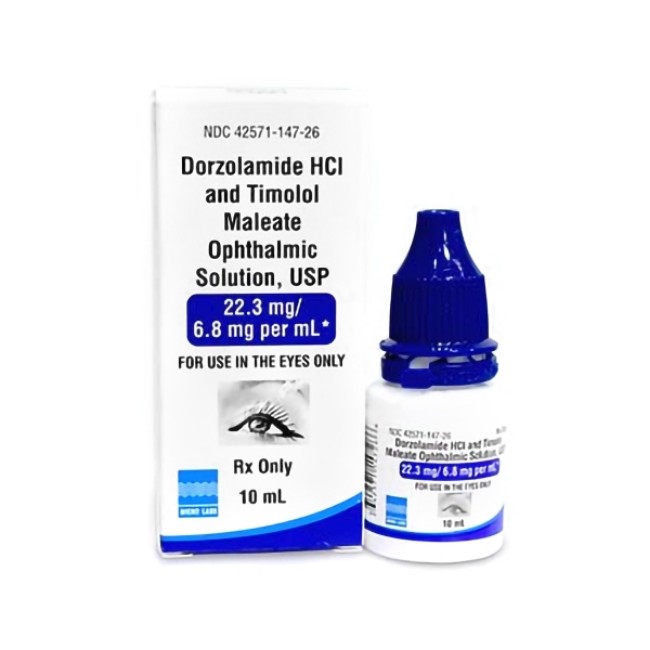
DORZOLAMIDE-TIMOLOL 22.3-6.8MG O/S 10 ML
Manufacturer: LEADING PHARMA
MFG#: 69315-0305-10
NDC: 69315-0305-10
PID: 234087
UN
$ *.**
In StockProduct Properties:
| Description | - |
|---|---|
| Description | - |
| DESI Drug Ind | - |
| DESI Drug Ind | - |
| DESI2 Drug Ind | AT |
| DESI2 Drug Ind | AT |
| Drug Category | - |
| Drug Category | - |
| Drug Type Code | N |
| Drug Type Code | N |
| FDA Approval Date | 05/01/2021 |
| FDA Approval Date | 05/01/2021 |
| FDA Therap Equiv | ML |
| FDA Therap Equiv | ML |
| HCPCS | - |
| HCPCS | - |
| Market Entry Date | - |
| Market Entry Date | - |
| Medical Coverage | - |
| Medical Coverage | - |
| Termination Date | 1 |
| Termination Date | 1 |
| Unit | 10 |
| Unit | 10 |
| Units Per Pkg | 06/13/2019 |
| Units Per Pkg | 06/13/2019 |
| Active Ingredients | 1856 timolol maleate 26921175; 4999 dorzolamide HCl 130693822 |
| Active Ingredients | 1856 timolol maleate 26921175; 4999 dorzolamide HCl 130693822 |
| AHFS Class | 52401200 CARBONIC ANHYDRASE INHIBITORS (EENT); 52400800 BETA-ADRENERGIC BLOCKING AGENTS (EENT) |
| AHFS Class | 52401200 CARBONIC ANHYDRASE INHIBITORS (EENT); 52400800 BETA-ADRENERGIC BLOCKING AGENTS (EENT) |
| DEA Class | NC |
| DEA Class | NC |
| Dose Form | DROPS |
| Dose Form | DROPS |
| Fine Line Class | 850085008510 All Rx Products |
| Fine Line Class | 850085008510 All Rx Products |
| Gen Code and Des | 39531 dorzolamide HCl/timolol maleat OPHTHALMIC DROPS 22.3-6.8/1 |
| Gen Code and Des | 39531 dorzolamide HCl/timolol maleat OPHTHALMIC DROPS 22.3-6.8/1 |
| Inactive Ingredients | 2272 mannitol 69658; 2332 sodium citrate 68042; 3141 benzalkonium chloride 8001545 |
| Inactive Ingredients | 2272 mannitol 69658; 2332 sodium citrate 68042; 3141 benzalkonium chloride 8001545 |
| OMP Family | - |
| OMP Family | - |
| Product Category | RX Pharmaceuticals |
| Product Category | RX Pharmaceuticals |
| Strength | 22.3-6.8MG |
| Strength | 22.3-6.8MG |
| Common Brand Name | COMMON BRAND NAME(S): Cosopt |
| Common Brand Name | COMMON BRAND NAME(S): Cosopt |
| Drug Interaction | DRUG INTERACTIONS: Drug interactions may change how your medications work or increase your risk for serious side effects. This document does not contain all possible drug interactions. Keep a list of all the products you use (including prescription/nonprescription drugs and herbal products) and share it with your doctor and pharmacist. Do not start, stop, or change the dosage of any medicines without your doctor's approval. Some products that may interact with this drug include: high doses of aspirin or related salicylates, oral beta-blockers (such as propranolol), oral carbonic anhydrase inhibitors (such as acetazolamide, methazolamide), clonidine, certain antidepressants (including SSRIs such as fluoxetine), digoxin, epinephrine, methyldopa, quinidine. Low-dose aspirin, as prescribed by your doctor for specific medical reasons such as heart attack or stroke prevention (usually 81-162 milligrams a day), should be continued. Consult your doctor or pharmacist for more details. |
| Drug Interaction | DRUG INTERACTIONS: Drug interactions may change how your medications work or increase your risk for serious side effects. This document does not contain all possible drug interactions. Keep a list of all the products you use (including prescription/nonprescription drugs and herbal products) and share it with your doctor and pharmacist. Do not start, stop, or change the dosage of any medicines without your doctor's approval. Some products that may interact with this drug include: high doses of aspirin or related salicylates, oral beta-blockers (such as propranolol), oral carbonic anhydrase inhibitors (such as acetazolamide, methazolamide), clonidine, certain antidepressants (including SSRIs such as fluoxetine), digoxin, epinephrine, methyldopa, quinidine. Low-dose aspirin, as prescribed by your doctor for specific medical reasons such as heart attack or stroke prevention (usually 81-162 milligrams a day), should be continued. Consult your doctor or pharmacist for more details. |
| Allocation Period | Weekly |
| Allocation Period | Weekly |
| Case Quantity | 12 |
| Case Quantity | 12 |
| Drug Form Pack Size | 10 |
| Drug Form Pack Size | 10 |
| Form | OPHTHALMIC SOL OR SUSP |
| Form | OPHTHALMIC SOL OR SUSP |
| Hazard Code | - |
| Hazard Code | - |
| Listed Chemical | - |
| Listed Chemical | - |
| NIOSH Code | - |
| NIOSH Code | - |
| Orange Book | AT Topical products therapeutically equivalent in same dosage form. |
| Orange Book | AT Topical products therapeutically equivalent in same dosage form. |
| Retail Pack Quantity | 1 |
| Retail Pack Quantity | 1 |
| Returnable Status | Returnable |
| Returnable Status | Returnable |
| Special Storage Cond | 00 None |
| Special Storage Cond | 00 None |
| Temp Zone | 10 Room Temperature |
| Temp Zone | 10 Room Temperature |
| Unit | EA |
| Unit | EA |
| Unit Size | 10 |
| Unit Size | 10 |
| How to Use | HOW TO USE: Read the Patient Information Leaflet if available from your pharmacist before you start using timolol/dorzolamide and each time you get a refill. If you have any questions, ask your doctor or pharmacist. Use this medication in the affected eye(s) as directed by your doctor, usually one drop 2 times a day. To apply eye drops, wash your hands first. To avoid contamination, do not touch the dropper tip or let it touch your eye or any other surface. Some products contain a preservative that may be absorbed by contact lenses. If you are using a product with a preservative and you wear contact lenses, remove the lenses before using the eye drops. Wait at least 15 minutes before putting in your contact lenses. Tilt your head back, look upward and pull down the lower eyelid to make a pouch. Hold the dropper directly over your eye and place one drop in your eye. Look downward and gently close your eyes for 1 to 2 minutes. Place one finger at the corner of your eye (near the nose) and apply gentle pressure. Try not to blink and do not rub your eye. This will prevent the medication from draining out. Repeat these steps for your other eye if so directed. Do not rinse the dropper. Replace the dropper cap after each use. If you are using another kind of eye medication (such as drops or ointments), wait at least 5 minutes before applying other medications. Use eye drops before eye ointments to allow the eye drops to enter the eye. Use this medication regularly in order to get the most benefit from it. To help you remember, use it at the same times each day. Keep using this medication even if you feel well. Most people with glaucoma or high pressure in the eyes do not feel sick. |
| How to Use | HOW TO USE: Read the Patient Information Leaflet if available from your pharmacist before you start using timolol/dorzolamide and each time you get a refill. If you have any questions, ask your doctor or pharmacist. Use this medication in the affected eye(s) as directed by your doctor, usually one drop 2 times a day. To apply eye drops, wash your hands first. To avoid contamination, do not touch the dropper tip or let it touch your eye or any other surface. Some products contain a preservative that may be absorbed by contact lenses. If you are using a product with a preservative and you wear contact lenses, remove the lenses before using the eye drops. Wait at least 15 minutes before putting in your contact lenses. Tilt your head back, look upward and pull down the lower eyelid to make a pouch. Hold the dropper directly over your eye and place one drop in your eye. Look downward and gently close your eyes for 1 to 2 minutes. Place one finger at the corner of your eye (near the nose) and apply gentle pressure. Try not to blink and do not rub your eye. This will prevent the medication from draining out. Repeat these steps for your other eye if so directed. Do not rinse the dropper. Replace the dropper cap after each use. If you are using another kind of eye medication (such as drops or ointments), wait at least 5 minutes before applying other medications. Use eye drops before eye ointments to allow the eye drops to enter the eye. Use this medication regularly in order to get the most benefit from it. To help you remember, use it at the same times each day. Keep using this medication even if you feel well. Most people with glaucoma or high pressure in the eyes do not feel sick. |
| Missed Dose | MISSED DOSE: If you miss a dose, use it as soon as you remember. If it is near the time of the next dose, skip the missed dose. Use your next dose at the regular time. Do not double the dose to catch up. |
| Missed Dose | MISSED DOSE: If you miss a dose, use it as soon as you remember. If it is near the time of the next dose, skip the missed dose. Use your next dose at the regular time. Do not double the dose to catch up. |
| Notes | NOTES: Do not share this medication with others. Lab and/or medical tests (such as eye exams) should be done while you are using this medication. Keep all medical and lab appointments. Consult your doctor for more details. |
| Notes | NOTES: Do not share this medication with others. Lab and/or medical tests (such as eye exams) should be done while you are using this medication. Keep all medical and lab appointments. Consult your doctor for more details. |
| Overdose | OVERDOSE: This medicine may be harmful if swallowed. If someone has overdosed and has serious symptoms such as passing out or trouble breathing, call 911. Otherwise, call a poison control center right away. US residents can call their local poison control center at 1-800-222-1222. Canada residents can call a provincial poison control center. Symptoms of overdose may include: trouble breathing or slow/irregular heartbeat. |
| Overdose | OVERDOSE: This medicine may be harmful if swallowed. If someone has overdosed and has serious symptoms such as passing out or trouble breathing, call 911. Otherwise, call a poison control center right away. US residents can call their local poison control center at 1-800-222-1222. Canada residents can call a provincial poison control center. Symptoms of overdose may include: trouble breathing or slow/irregular heartbeat. |
| Phonetic Pronunciation | (TIE-moh-lohl/door-ZOHL-uh-mide) |
| Phonetic Pronunciation | (TIE-moh-lohl/door-ZOHL-uh-mide) |
| Precautions | PRECAUTIONS: Before using timolol/dorzolamide, tell your doctor or pharmacist if you are allergic to these drugs; or if you have any other allergies. This product may contain inactive ingredients (such as preservatives like benzalkonium chloride), which can cause allergic reactions or other problems. Talk to your pharmacist for more details. Before using this medication, tell your doctor or pharmacist your medical history, especially of: lung disease (such as asthma, chronic obstructive pulmonary disease), certain types of irregular heartbeats (such as sinus bradycardia, second or third degree AV block), certain types of heart disease (such as heart failure), kidney disease (such as kidney stones), liver disease, diabetes, overactive thyroid disease, muscle weakness disorders, low blood flow to the brain (cerebrovascular insufficiency), severe allergies. If you develop an eye infection or injury, or have eye surgery, check with your doctor about whether you should continue to use your current bottle of timolol/dorzolamide. You may be advised to start using a new bottle. Before having surgery, tell your doctor or dentist about all the products you use (including prescription drugs, nonprescription drugs, and herbal products). This product may prevent the fast/pounding heartbeat you would usually feel when your blood sugar level falls too low (hypoglycemia). The risk is higher if you have diabetes, or are vomiting, fasting, or not eating regularly. Other symptoms of low blood sugar level, such as dizziness and sweating, are not affected by this drug. If you have diabetes, this product may make it harder to control your blood sugar levels. Check your blood sugar levels regularly as directed by your doctor. Tell your doctor right away if you have symptoms of high blood sugar such as increased thirst/urination. Your doctor may need to adjust your diabetes medication, exercise program, or diet. After you apply this drug, your vision may become temporarily blurred. Do not drive, use machinery, or do any activity that requires clear vision until you can do it safely. During pregnancy, this medication should be used only when clearly needed. Discuss the risks and benefits with your doctor. Timolol passes into breast milk. It is unknown if dorzolamide passes into breast milk. Consult your doctor before breast-feeding. |
| Precautions | PRECAUTIONS: Before using timolol/dorzolamide, tell your doctor or pharmacist if you are allergic to these drugs; or if you have any other allergies. This product may contain inactive ingredients (such as preservatives like benzalkonium chloride), which can cause allergic reactions or other problems. Talk to your pharmacist for more details. Before using this medication, tell your doctor or pharmacist your medical history, especially of: lung disease (such as asthma, chronic obstructive pulmonary disease), certain types of irregular heartbeats (such as sinus bradycardia, second or third degree AV block), certain types of heart disease (such as heart failure), kidney disease (such as kidney stones), liver disease, diabetes, overactive thyroid disease, muscle weakness disorders, low blood flow to the brain (cerebrovascular insufficiency), severe allergies. If you develop an eye infection or injury, or have eye surgery, check with your doctor about whether you should continue to use your current bottle of timolol/dorzolamide. You may be advised to start using a new bottle. Before having surgery, tell your doctor or dentist about all the products you use (including prescription drugs, nonprescription drugs, and herbal products). This product may prevent the fast/pounding heartbeat you would usually feel when your blood sugar level falls too low (hypoglycemia). The risk is higher if you have diabetes, or are vomiting, fasting, or not eating regularly. Other symptoms of low blood sugar level, such as dizziness and sweating, are not affected by this drug. If you have diabetes, this product may make it harder to control your blood sugar levels. Check your blood sugar levels regularly as directed by your doctor. Tell your doctor right away if you have symptoms of high blood sugar such as increased thirst/urination. Your doctor may need to adjust your diabetes medication, exercise program, or diet. After you apply this drug, your vision may become temporarily blurred. Do not drive, use machinery, or do any activity that requires clear vision until you can do it safely. During pregnancy, this medication should be used only when clearly needed. Discuss the risks and benefits with your doctor. Timolol passes into breast milk. It is unknown if dorzolamide passes into breast milk. Consult your doctor before breast-feeding. |
| Side Effects | SIDE EFFECTS: Temporary blurred vision, temporary burning/stinging/itching/redness of the eye, watery eyes, dry eyes, feeling as if something is in the eye, sensitivity of eyes to light, strange taste in the mouth, or headache may occur. If any of these effects last or get worse, tell your doctor or pharmacist promptly. Remember that this medication has been prescribed because your doctor has judged that the benefit to you is greater than the risk of side effects. Many people using this medication do not have serious side effects. Tell your doctor right away if you have any serious side effects, including: dizziness, slow/irregular heartbeat, muscle weakness, mental/mood changes, coldness/numbness/pain in the hands or feet, vision changes, signs of a kidney stone (such as pain in the back/side/abdomen, nausea/vomiting, blood in the urine), yellowing eyes or skin, dark urine, unusual tiredness/weakness, easy bruising/bleeding, signs of infection (such as sore throat that doesn't go away, fever, chills). Get medical help right away if you have any very serious side effects, including: eye redness or discharge that doesn't stop, eye or eyelid swelling, eye pain, sudden unexplained weight gain, chest pain, weakness on one side of the body, trouble speaking, confusion, severe dizziness, fainting. A very serious allergic reaction to this drug is rare. However, get medical help right away if you notice any symptoms of a serious allergic reaction, including: rash, itching/swelling (especially of the face/tongue/throat), severe dizziness, trouble breathing. This is not a complete list of possible side effects. If you notice other effects not listed above, contact your doctor or pharmacist. In the US - Call your doctor for medical advice about side effects. You may report side effects to FDA at 1-800-FDA-1088 or at www.fda.gov/medwatch. In Canada - Call your doctor for medical advice about side effects. You may report side effects to Health Canada at 1-866-234-2345. |
| Side Effects | SIDE EFFECTS: Temporary blurred vision, temporary burning/stinging/itching/redness of the eye, watery eyes, dry eyes, feeling as if something is in the eye, sensitivity of eyes to light, strange taste in the mouth, or headache may occur. If any of these effects last or get worse, tell your doctor or pharmacist promptly. Remember that this medication has been prescribed because your doctor has judged that the benefit to you is greater than the risk of side effects. Many people using this medication do not have serious side effects. Tell your doctor right away if you have any serious side effects, including: dizziness, slow/irregular heartbeat, muscle weakness, mental/mood changes, coldness/numbness/pain in the hands or feet, vision changes, signs of a kidney stone (such as pain in the back/side/abdomen, nausea/vomiting, blood in the urine), yellowing eyes or skin, dark urine, unusual tiredness/weakness, easy bruising/bleeding, signs of infection (such as sore throat that doesn't go away, fever, chills). Get medical help right away if you have any very serious side effects, including: eye redness or discharge that doesn't stop, eye or eyelid swelling, eye pain, sudden unexplained weight gain, chest pain, weakness on one side of the body, trouble speaking, confusion, severe dizziness, fainting. A very serious allergic reaction to this drug is rare. However, get medical help right away if you notice any symptoms of a serious allergic reaction, including: rash, itching/swelling (especially of the face/tongue/throat), severe dizziness, trouble breathing. This is not a complete list of possible side effects. If you notice other effects not listed above, contact your doctor or pharmacist. In the US - Call your doctor for medical advice about side effects. You may report side effects to FDA at 1-800-FDA-1088 or at www.fda.gov/medwatch. In Canada - Call your doctor for medical advice about side effects. You may report side effects to Health Canada at 1-866-234-2345. |
| Storage | STORAGE: Store at room temperature away from light. Store the single-use containers in the pouch. Discard any unused single-use containers 15 days after opening the pouch. This product is normally colorless. Discard the solution if it changes color, becomes cloudy, or develops particles. Keep all medications away from children and pets. Do not flush medications down the toilet or pour them into a drain unless instructed to do so. Properly discard this product when it is expired or no longer needed. Consult your pharmacist or local waste disposal company. |
| Storage | STORAGE: Store at room temperature away from light. Store the single-use containers in the pouch. Discard any unused single-use containers 15 days after opening the pouch. This product is normally colorless. Discard the solution if it changes color, becomes cloudy, or develops particles. Keep all medications away from children and pets. Do not flush medications down the toilet or pour them into a drain unless instructed to do so. Properly discard this product when it is expired or no longer needed. Consult your pharmacist or local waste disposal company. |
| Uses | USES: This product contains two drugs used to treat high pressure inside the eye due to glaucoma (open angle-type) or other eye diseases (such as ocular hypertension). Lowering high pressure inside the eye helps to prevent blindness. This medication works by decreasing the amount of fluid within the eye. Timolol belongs to a class of drugs known as beta-blockers, and dorzolamide belongs to a class of drugs known as carbonic anhydrase inhibitors. |
| Uses | USES: This product contains two drugs used to treat high pressure inside the eye due to glaucoma (open angle-type) or other eye diseases (such as ocular hypertension). Lowering high pressure inside the eye helps to prevent blindness. This medication works by decreasing the amount of fluid within the eye. Timolol belongs to a class of drugs known as beta-blockers, and dorzolamide belongs to a class of drugs known as carbonic anhydrase inhibitors. |
Additional Information
| Product Name | Dorzolamide-Timolol 22.3-6.8 mg Ophthalmic Solution, 10 mL |
| Type | Carbonic Anhydrase Inhibitor & Beta-Blocker Combination |
| Generic Drug Name | Dorzolamide Hydrochloride - Timolol Maleate |
| Mechanism of Action | Dorzolamide reduces aqueous humor production by inhibiting carbonic anhydrase; Timolol decreases aqueous humor production by blocking beta-adrenergic receptors |
| Strength | 22.3 mg/mL - 6.8 mg/mL |
| Volume | 10 mL |
| Dosage Form | Ophthalmic Solution |
| Dosage | One drop in affected eye(s) twice daily |
| Onset of Action | Within 30 minutes of administration |
| Duration of Action | Effects last up to 12 hours |
| Preservative | Benzalkonium Chloride |
| Adverse Effects | Ocular irritation, blurred vision, dry eyes, systemic beta-blocker effects |
| Storage Conditions | Store at 15° - 30°C (59° - 86°F), protect from light and moisture |
| Packaging | Dropper bottle |
| Uses | Lowering intraocular pressure in open-angle glaucoma and ocular hypertension |
Description
Dorzolamide-Timolol Ophthalmic Solution, 22.3 mg - 6.8 mg per mL, is a topical medication used to reduce elevated intraocular pressure (IOP) in patients with open-angle glaucoma or ocular hypertension. It is a fixed-dose combination of Dorzolamide, a carbonic anhydrase inhibitor, and Timolol, a non-selective beta-adrenergic receptor blocker. By combining two active agents, the formulation enhances IOP reduction more effectively than monotherapy.
Dorzolamide inhibits carbonic anhydrase II, an enzyme involved in the production of aqueous humor in the ciliary processes of the eye. This inhibition leads to a decrease in aqueous humor secretion, resulting in lower intraocular pressure. Timolol complements this effect by reducing aqueous humor production through beta-adrenergic receptor blockade in the ciliary epithelium.
The ophthalmic solution is sterile, preservative-containing, and formulated for topical use only. It is supplied in a 10 mL bottle with a dropper tip for precise administration. The recommended dosage is one drop in the affected eye(s) twice daily, as directed by a healthcare provider.
Frequently Asked Questions (FAQs)
The cost of DORZOLAMIDE-TIMOLOL 22.3-6.8MG O/S 10 ML is $$0.00
DORZOLAMIDE-TIMOLOL 22.3-6.8MG O/S 10 ML is manufactured by LEADING PHARMA.
You can purchase DORZOLAMIDE-TIMOLOL 22.3-6.8MG O/S 10 ML on our website at https://supplies.pipelinemedical.com/product/detail/dorzolamide-timolol-22-3-6-8mg-o-s-10-ml-234087